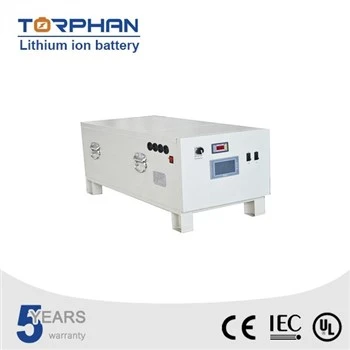
The storage side
The storage anchor is the manufacturer's Li-S 51206 datasheet: 51.2 Vdc rated voltage, 206 Ah rated capacity, 10.5 kWh system energy, a working voltage range of 48 to 57.6 Vdc, 96% depth of discharge, and standard charge and discharge currents of 50 A. Around it, the wall-mounted Li-W series covers 100 Ah (5.12 kWh), 206 Ah (10.5 kWh) and 280 Ah (14.3 kWh), and the Li-S home systems reach 560 Ah (28.6 kWh) in a single unit.
The motive side
In forklift duty the same nominal platform is the Li-Power 51-series: 200 Ah to 560 Ah packs at 51.2 Vdc for electric warehouse equipment, with charge currents from 100 A to 250 A by model and size and weight customised to the truck. The shared nominal voltage does not by itself make chargers or BMS settings interchangeable between the two duties: charge currents, connectors and communication profiles are specified per model, so any cross-duty pairing is confirmed model by model in the quote.
Why 51.2V became the standard
Sixteen LFP cells in series give a working range (48 to 57.6 Vdc here) that matches the 48V inverter and charger ecosystem used across solar and industrial power. Depth of discharge at 96% and cycle life over 7000 on the storage series are what make the format economical: almost all of the nameplate energy is usable, and it stays usable for years of daily cycling.
Choosing a 48V LiFePO4 battery
Decide the duty first — storage or motive — then capacity. Storage buyers size in kWh against the daily load; forklift buyers size in Ah against the truck and shift. Both start from the datasheets reproduced on this site's product pages. Send voltage, capacity and application with your inquiry for a matched quote. Minimum order quantities and lead times are confirmed on quotation.
Standards the format is built around
The 48V-class products in this range ship with the manufacturer's standard battery documentation set: CE, an ISO9001 Certificate, an IEC Certificate, UN38.3 and a sea-transport identification and classification report, and the About record states CE, IEC62619, UN38.3 and UL certifications for the battery range. Certificates are available upon request. For a 48V buyer the practical point is transport and compliance paperwork: a 51.2V LiFePO4 battery ships as regulated lithium cargo, and the documentation set is what the freight process asks for.