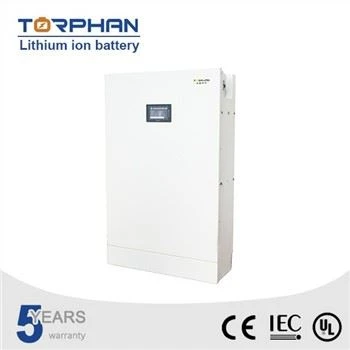
How the bank is built
The bank building blocks are the 51.2V Li-W and Li-S units: 5.12 kWh, 10.5 kWh and 14.3 kWh wall units that parallel up to six pieces, and home-system units at 14.3 kWh and 28.6 kWh. A bank is sized by adding units until the usable capacity covers the design load, keeping the 96% depth of discharge in the arithmetic. At the top of the range the bank becomes a container: the 512 Vdc, 500 Ah container platform with up to 150 kW output, designed so multiple containers run in parallel to increase total capacity.
Why modularity matters over a project's life
PV projects change: arrays are extended, loads grow, a second building is connected. A modular bank grows by adding the same unit, with the same BMS platform and the same CAN or RS485 communication to the inverter, instead of replacing the bank. The BMS feature set — state of charge calculation, cell protection, pack temperature monitoring and health monitoring — applies per unit, so an expanded bank stays balanced and observable.
Bank versus generator and grid-only designs
A battery bank responds instantly, silently and without fuel logistics, and it monetises solar generation that would otherwise be exported at low value. The container platform adds cycle-one-to-several-times-per-day operation, which suits solar shifting duty where the bank charges and discharges daily.
Specifying a bank
Send the array capacity, the daily load profile in kWh, the hours of autonomy required and whether the site is on-grid, off-grid or hybrid. The quote names the units, the parallel count and the inverter interface. Minimum order quantities and lead times are confirmed on quotation.
Monitoring a bank as it grows
A bank that grows unit by unit needs monitoring that grows with it. The BMS platform provides state of charge calculation, cell protection, temperature monitoring and pack health monitoring per unit, with display options that show battery condition in detail and communication over CAN and RS485 to the inverter and site controller. In a parallel bank that means every added unit reports on the same basis, imbalances are visible early, and the bank's expansion history does not become a monitoring blind spot — a practical requirement for project owners who will operate the bank for a decade or more.