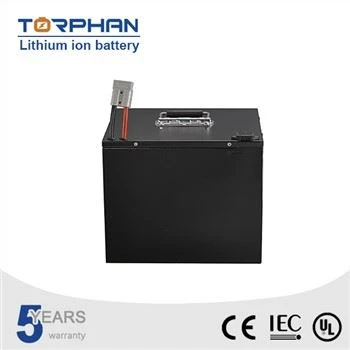
The 36V position
The manufacturer lists a 36V deep cycle battery in its forklift battery listings and a 36V lithium battery for golf cart among its models, built on the same lithium iron phosphate platform as the rest of the range, with a built-in BMS, sealed maintenance-free construction, and the LFP safety profile. As with the 48V programme, the conversion approach is a turn-key replacement that converts a cart from lead acid to a lithium battery pack in under one hour on the existing wiring.
What the conversion removes — and adds
Removed: watering, equalisation charging, terminal corrosion cleaning, acid handling, and the mid-life bank replacement cycle — the manufacturer's golf cart battery listings state a 5-year warranty and describe the lithium line for this duty as long-life and maintenance-free, so the replacement becomes a planned pack change instead of a recurring bank rota. Added: consistent voltage through the round, charging during breaks (a feature of its golf cart battery line), and a pack light enough to change cart handling noticeably against a six-battery lead-acid bank.
Protection is the item to pin down in the quote. The 36V pack's own datasheet sets out its electrical and temperature limits — 80 Ah nominal capacity, continuous discharge of 120 A, a charge window of 0°C to 50°C and discharge from -20°C — rather than a named BMS protection set. Elsewhere in the golf cart range, the 72V-class Li Power 73105 datasheet lists over-temperature protection and an under-voltage alarm among its relay protection functions. Ask for the protection set fitted to the 36V pack to be stated in your quote.
Ordering
Send the cart brand and model and confirm 36V. State whether you want the pack alone or the pack with a matched lithium charger. Minimum order quantities and lead times are confirmed on quotation.
Why 36V carts benefit most from conversion
A 36V cart is usually an older vehicle whose lead-acid bank is a larger share of its remaining value and its maintenance burden. The conversion replaces that bank — typically the next major expense the cart faces — with a sealed pack on the same LiFePO4 platform as the manufacturer's storage lines, with the sealed, maintenance-free construction of its lithium golf cart line instead of another round of the watering and terminal-care routine. For a utility or campground cart that must simply work every day, that exchange — one predictable pack for a recurring battery rota — is the whole argument.