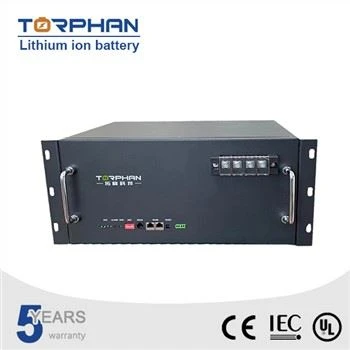
What is inside a Torphan pack
Every pack in the range combines high-quality lithium iron phosphate cells with a smart BMS, relays, fuses and a shunt. The BMS calculates state of charge, protects each cell against over-voltage and under-voltage, monitors pack temperature and watches the health of the pack as a whole. On storage packs the same platform adds communication — CANbus and RS485 — so the pack can talk to the inverter and the charger instead of working blind.
Pack families in this range
- Motive packs — 24V, 36V, 48V and 80V forklift packs from the Li-Power series, sized from 200 Ah to 560 Ah in the datasheets and up to 1200 Ah across the wider programme.
- Storage packs — 51.2V rack modules and wall-mounted units from 5.12 kWh to 14.3 kWh per unit, parallel-ready for larger banks.
- Solar and home packs — LiFePO4 packs with built-in BMS for RV, solar and home energy storage, with a 10-year lifetime design on the home solar pack listing.
- Marine and UPS packs — deep-cycle LiFePO4 packs for boats and lithium backup packs for UPS systems.
Standard or custom
Standard packs cover most replacement and project work directly from the datasheets. Where the equipment demands it, the manufacturer builds to drawing: the OEM position is "you supply the technical drawings, we build you a Torphan battery", with battery capacity, weight and size customised to the requirement. That applies to forklift trays that must match an existing truck compartment as much as to storage cabinets for a specific room.
Choosing the right pack
Three decisions set the pack: the voltage class of the equipment, the capacity the duty cycle consumes, and the communication the system expects. The product pages on this site carry the values for each family — start from the application (forklift, storage, solar, marine, UPS), confirm voltage and capacity against the datasheet, then send those two numbers with your inquiry so the quote is built on the right pack from the first reply.