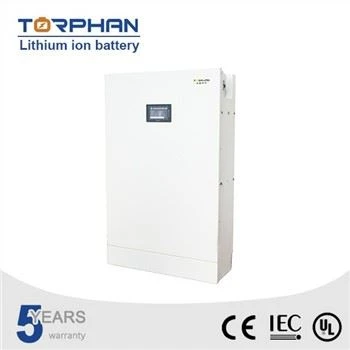
Datasheet values
| Item | Li-S 51280 | Li-S 51560 |
|---|---|---|
| Rated voltage | 51.2 Vdc | 51.2 Vdc |
| Rated capacity | 280 Ah | 560 Ah |
| System energy | 14.3 kWh | 28.6 kWh |
| Working voltage range | 48~57.6 Vdc | 48~57.6 Vdc |
| Depth of discharge | 96% | 96% |
| Max charge current | 140 A | 200 A |
| Max discharge current | 140 A | 200 A |
| Cycle life | >7000 | >7000 |
| Size (L x W x H) | 680 x 230 x 490 mm | 955 x 550 x 1480 mm |
| Weight | 140 kg | 390 kg |
| Parallel connection | 6 pcs | 2 pcs |
Both units run a 96% depth of discharge and a cycle life of over 7000, which is the figure that matters for a home system cycled daily on solar duty. The smaller unit parallels up to six pieces, the larger to two, so the platform covers a wide band of homes without changing voltage architecture.
Inside the system
The home system design integrates the battery with a smart BMS that automatically controls and protects against overheating, over-voltage and over-current, with an optional LCD display showing state of charge, voltage, temperature and charge and discharge current. Communication runs over CANbus and RS485 to the inverter and charger, so the home system charges from solar or the grid on schedule and discharges on demand without manual switching.
The operating concept is a microgrid design for the house: the system runs in off-grid or grid-connected mode and switches seamlessly between them, which greatly improves the reliability of the power supply, and the management strategy can be adjusted to the grid, the load, the storage state and the electricity price.
Light, clean and quiet
The manufacturer's comparison point is weight and cleanliness: the lithium units weigh about one third of an equivalent lead-acid bank, contain no heavy metals or rare metals, and do not overheat, burn or explode under high temperature or overcharge conditions — the safety basis for installing storage inside a home. Send your daily consumption and backup requirements for a sized quote. Minimum order quantities and lead times are confirmed on quotation.
Applications beyond the house
The datasheet behind this home platform lists a wider application field than houses alone — the same 48V-class home storage technology appears for cars, motorcycles, golf cars, lawn mowers and safety systems in the manufacturer's home-storage listings — which is why the platform is built around standard interfaces (CANbus, RS485, LCD display) rather than a single proprietary inverter pairing. For the home buyer the practical meaning is choice: the battery is not locked to one inverter brand's ecosystem, and a later inverter change does not orphan the storage.