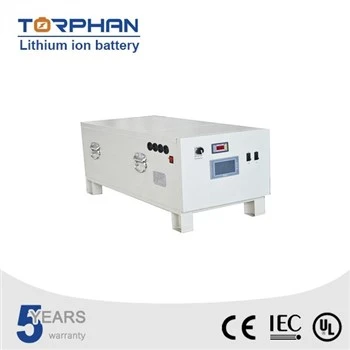
Safety and thermal behaviour
This is the decisive difference. The manufacturer's description of phosphate-based technology is that it possesses superior thermal and chemical stability: LFP cells are incombustible in the event of mishandling during charge or discharge, more stable under overcharge or short-circuit conditions, and able to withstand high temperatures without decomposing; when abuse occurs, the phosphate cathode does not burn and is not prone to thermal runaway. The container storage platform makes the same point in system language: no thermal runaway with fire propagation. One forklift datasheet quantifies the cell behaviour: an LFP cell will not catch fire until 270 C, and the pack's BMS shuts the battery down at 65 C if it detects a problem. Nickel- and cobalt-based lithium-ion cells store more energy per kilogram, but they are also the chemistries treated as hazardous materials when damaged — a material consideration when the battery lives indoors, on a truck, or on a home wall.
Cycle life and cost per cycle
Industrial batteries are bought by the cycle, not by the kilogram. LFP cycle figures in this range: over 7000 cycles on the wall-mounted storage series, at least 5000 cycles on the container platform, 3500 cycles at 80% depth of discharge on the 36V forklift line, and a general range of 2000 to 5000 cycles at up to 10 years of service life on the LiFePO4 battery lines. Higher-density lithium-ion typically trades some of that endurance for compactness — the home battery comparison in the range puts generic lithium-ion at 500 to 1000 cycles in embedded, high-temperature service against 1000 to 10000 for lithium iron phosphate. For a forklift or a daily-cycling solar battery, cost per cycle usually dominates the business case, and it favours LFP.
Energy density: the honest trade
LFP's weakness is real and should be stated: its energy density is lower than cobalt-based lithium-ion, so an LFP pack is larger and heavier for the same energy. The storage literature concedes that LFP batteries have to be slightly larger to hold the same energy. Where does that matter? In a phone or a passenger car, completely. In a forklift, the battery's weight is part of the counterbalance system — extra mass is often a requirement, not a penalty. In stationary storage, the wall modules are 88 to 226 mm deep and hang on a wall; a modest size increase buys the safety and life above at no operational cost.
Temperature, storage and environment
LFP operating windows in this range are wide: discharge from -20 to 55 C on the forklift and storage lines, with the forklift platform functioning from -31 F to 104 F with little to no drop-off in voltage output. Self-discharge is under 3% per month, with a 350-day shelf life noted for LFP against roughly 300 days for lithium-ion in the home battery comparison. Environmentally, LFP is cobalt-free and non-toxic, contains no heavy metals, and its phosphate salts are less soluble — points that matter for indoor installation and for end-of-life handling.
So which fits your project?
Choose LFP when the battery is large, cycles daily, lives indoors or on a vehicle people ride, and must last a decade: forklift traction, home and commercial storage, solar banks, marine and UPS duty — the applications this site covers. Choose high-density lithium-ion when every gram and millimetre is contested and cycle demands are modest: portable electronics and weight-critical vehicles. Most industrial buyers who run the numbers on cost per cycle and risk land on LFP, which is why the entire range here — from a 12.8V solar unit to a 512V container — is built on it.
What the datasheets show, side by side
The differences stop being abstract on the specification tables. The LFP forklift datasheet carries a 96% depth of discharge and a recommended state-of-charge window of 20% to 100% — LFP tolerates being used almost fully, daily. The storage series carries cycle life over 7000 at that depth; the high-density chemistries optimised for consumer devices are typically rated at a fraction of that cycle count at full depth, which is why device batteries are managed to shallow windows. For a project buyer, the datasheet questions that separate the chemistries are therefore: cycle life at what depth of discharge, operating temperature window, and what happens on overcharge. LFP's answers to those three questions are the reason it owns the industrial segment.
A note on "lithium-ion" as a label
Because LFP is a lithium-ion chemistry, marketing language blurs the comparison — a product labelled simply "lithium-ion" may be either family. The Torphan range resolves the ambiguity by naming the chemistry in the product line itself: lithium iron phosphate. When comparing competing offers, ask which cathode chemistry is inside, and judge the answer against the criteria in this article rather than against the family label.
Efficiency and the cost of a stored kWh
One more figure belongs in the comparison: efficiency. The lithium line carries a 98% efficiency rate, and the container storage platform at least 90% system efficiency including charge and discharge through the full system. High round-trip efficiency compounds over thousands of cycles: every percentage point is energy bought once and used, rather than bought and lost as heat. Combined with self-discharge under 3% per month — against 15 to 30% for lead-acid — the stored-kWh economics of LFP in daily-cycling duty are difficult for any chemistry with lower cycle life or higher losses to match, whatever its nameplate density. When a supplier quotes a storage project, ask for the efficiency figure alongside the capacity figure; the answers in these datasheets are a useful benchmark for what a serious datasheet should state.
The product pages reproduce the LFP datasheets family by family — forklift, wall storage, container and pack — so the claims in this article can be checked against the manufacturer's own tables rather than taken on trust.