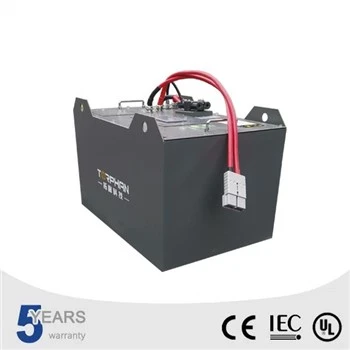
The purchase price is real — and it is the only line lead-acid wins
Start by conceding the obvious. If the comparison is "price of one battery, today", lead-acid wins. Lithium iron phosphate cells, a smart BMS, and a steel tray engineered to match the truck cost more than lead plates and acid. Any honest total-cost analysis begins there, and any lithium proposal that hides it should not be trusted. The rest of this article is about why fleets pay it anyway — the answer is in the four cost lines that follow the purchase.
Cost line 1: how many batteries you buy over the truck's life
Cycle life is the first multiplier. The figures for the Torphan range put lithium cycle life at 2 to 3 times that of lead-acid: 3500 cycles at 80% depth of discharge on the 36V forklift line, and one comparison noting that lithium-ion forklift batteries last about four times longer in service. A lead-acid traction battery in hard multi-shift work is commonly a mid-life replacement item for the truck; a lithium pack is usually bought once for the same period. Divide the purchase price by service years and the "twice the price" headline is already close to parity before anything else is counted.
Cost line 2: the second battery you do not buy
Multi-shift lead-acid operation needs more than one battery per truck: one in the truck, one on charge or cooling. That means the fleet buys, maintains and eventually replaces roughly two batteries per multi-shift truck, plus the changing equipment and the battery room to house them. A lithium battery accepts opportunity charging and stays in the truck, so one battery covers two or even three shifts. For a multi-shift site, the comparison is not lithium price versus lead-acid price — it is one lithium battery versus two lead-acid batteries, a changer, and the floor space all of it occupies. Floor space in a warehouse has a rent value, and the lithium case counts the freed battery room as productive space returned to the operation.
Cost line 3: energy and labour in the charging routine
Charging a lead-acid battery is inefficient and labour-intensive. The manufacturer's industrial battery record puts lithium charging energy consumption at about 40% less than the lead-acid routine, and its fast-charge figures — a full charge in 1 to 2 hours on the forklift line, subject to pack capacity and charger pairing, against the long charge-plus-cooling cycle of lead-acid — change what a shift can do. Labour is the quieter line: lead-acid needs watering, equalisation charges, terminal cleaning, and the handling work of battery changes, with the safety overhead of acid and gas management. The lithium position is that all of it is eliminated: no watering, no fumes, no acid spills, no battery changing. Those labour hours are small per day and very large per year.
Cost line 4: performance across the shift
A lead-acid battery's voltage falls as it discharges, so the truck slows late in the shift; a lithium pack delivers fast lifting and travel speeds at all levels of discharge. That is a productivity line rather than a battery line, but it belongs in the comparison: the same fleet moves more pallets per shift on lithium, or moves the same pallets with fewer truck-hours. Sites rarely quantify it precisely, but operators notice it immediately, and it is one reason conversions rarely reverse.
Putting it together — and the verdict
The manufacturer's industrial battery record summarises its own numbers as a 20-25% reduction in operating costs over the life of the lift truck, from fast charging, lower charging energy use and the much longer lifetime of lithium iron phosphate. Treat that as a vendor figure for its own range, and test it against your site: your shifts per day, your labour rate for battery care, your electricity tariff, and your cost of warehouse space. Fleets that run one gentle shift a day with cheap space may genuinely be served by lead-acid for years. Fleets that run two or three shifts, pay for battery labour, or are short of space will find the lithium total lower — often much lower. The price guide on this site breaks down what sets a quote; the voltage pages carry the datasheets behind these figures.
A worked comparison in figures
Make the comparison concrete with the range's own numbers. Take a two-shift counterbalance truck. On lead-acid it carries two batteries over the comparison period's first cycle-life window, each needing watering labour, charging-room space and a changer; and its charging routine is the less efficient of the two — the industrial record puts lithium charging at about 40% less energy than the lead-acid routine, measured against lead-acid as the base. On lithium it carries one pack, at about twice the purchase price of one lead-acid battery, with a cycle life two to three times longer — so across two lead-acid generations the lithium truck has bought one battery against the lead-acid truck's four (two positions times two generations), before labour, energy and space are priced at all. That is the arithmetic behind the 20-25% operating-cost reduction claim, and it is why the purchase-price gap, while real, is rarely the deciding number for multi-shift fleets.
When lead-acid still wins — honestly
The comparison is duty-dependent. A single-shift site with low utilisation, cheap floor space, in-house battery labour already on payroll, and no expansion pressure extracts full value from a lead-acid battery and may wait years for lithium's advantages to repay the premium. The break-even moves with utilisation: the more shifts, the more trucks, and the tighter the space, the faster lithium wins. Run your own duty through the four cost lines above; if two or more of them are significant on your site, the lithium total will be lower.
How to run the comparison on your own fleet
You do not need a consultant to test the claims; you need four numbers from your own operation. Count the battery-related labour hours your team actually spends per week — watering, changing, cleaning, charging-room management. Read your electricity use for charging over a month, or estimate it from charger hours. Price your battery-room floor space at your site's rent per square metre. And count the batteries you expect to buy per truck over the truck's remaining life on each chemistry. Enter those beside the two purchase prices and the comparison usually resolves itself: the lithium case is won or lost on your labour rate, your shift count and your space cost, not on the battery invoice. If the numbers are close, remember the unpriced lines — late-shift truck performance and the end of battery handling risk — before deciding.