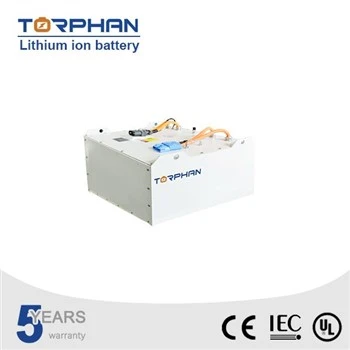
Why lead-acid cannot do this
A lead-acid traction battery wants a full, uninterrupted charge cycle, followed by cooling, and it suffers when charges are partial or interrupted: sulfation, stratification and the weekly equalisation charge all trace back to how the chemistry ages under irregular use. Partial charging also confuses the simple state-of-charge gauges lead-acid fleets rely on. The result is the familiar routine — batteries swapped per shift, a dedicated charging room, and a watering schedule. Opportunity charging exists because lithium removed those constraints.
Why lithium is built for it
The Torphan forklift position is explicit: the batteries provide operational flexibility because they can be charged incrementally rather than in one go, letting operators partially charge in the time it takes to have a quick break, and a 15-minute charge creates about an hour of runtime. Lithium iron phosphate has no memory effect, so partial charges cost nothing in capacity, and its life is counted in cycles at a stated depth of discharge — 3500 cycles at 80% DoD on the 36V line — rather than in "charge events". Fast charging completes the picture: the industrial battery record puts a full charge at 1 to 2 hours — the achieved time depends on pack capacity and charger current — so even the longest break is a substantial refill, and with opportunity top-ups through the day one battery lasts through two or even three shifts.
The charger's half of the system
Opportunity charging is a charger story as much as a battery story. Two design features do the work. First, the battery does not need to leave the truck or travel to a charging room: lateral charge ports on the 80V design allow quick and easy opportunity charging in place, and the same plug-in-where-it-parks principle applies across the range — charging can occur wherever and whenever convenient. Second, the charger communicates with the battery's BMS over CANbus: the TOR6107 series manages charging automatically against the pack's limits, so a ten-minute top-up and a full charge are both supervised sessions, and there is no overcharging risk when a truck sits connected between shifts. Operators can take responsibility for their own motive power needs, plugging in as part of the break routine rather than handing the truck to a battery crew.
What changes on the warehouse floor
Adopting opportunity charging changes the floor more than the fleet list. The battery room can be retired or shrunk to a parking-and-plug area near the break points, because the lithium design needs no watering station, no ventilation for charging gases, and no changing equipment. Spare batteries leave the balance sheet: the one-battery-multi-shift operation removes the second (and third) battery per truck, the changer, and the swap labour. Shift planning also changes — charge state becomes a break-time habit to manage like fuel stops, and the BMS display options (state of charge on an LCD, a low-charge buzzer on the 36V platform) give operators the information to do it without a supervisor's spreadsheet.
Getting started
The practical rollout is simple: keep trucks and batteries as they are on day one, place chargers where trucks naturally pause, and brief operators to plug in at every break. The fleet data to send for a properly specified system is truck count by voltage class, shift pattern, and where trucks park during breaks — from that, the battery capacities and charger count (TOR6107 models from 24V to 120V) can be sized so no truck ever waits for charge instead of working.
Charger placement and count: the practical planning
Opportunity charging works when plugging in costs the operator ten seconds, so charger placement is a floor-plan decision: at break areas, at shift-change parking, and at natural dwell points in the workflow — not in a remote battery room. The charger series supports the pattern electrically: TOR6107 models at 24V (200 A), 48V (100 A), 80V (60 A) and 120V (40 A) deliver up to 6 kW each, and because sessions are short and staggered across the fleet's breaks, a site rarely needs one charger per truck; the ratio is set by how many trucks pause simultaneously at peak break time. Chargers run at over 95% efficiency with automatic, BMS-supervised operation, so a plugged truck needs no attendant and no one must remember to disconnect it. The series also offers Anderson, GB charging gun and REMA connector options, so the plug a driver handles at each break can match the connector standard the fleet already uses.
The objections, answered from the record
Two objections surface in every fleet discussion. "Partial charging shortens battery life" is a lead-acid truth misapplied: lithium iron phosphate has no memory effect, its life metric is cycles at a stated depth of discharge, and shallower opportunity cycles are gentler than deep ones. "Operators will forget" is an organisational point with a design answer: make the plug part of parking, and use the feedback tools — state-of-charge display and low-charge audible alarm — so the truck itself prompts the habit. A fleet evaluating the change can run the comparison on its own floor before committing: count the swap labour, changer handling and battery-room work the current routine consumes per shift, and set it against the plug-in seconds the opportunity pattern asks for at each break.
What opportunity charging does to battery sizing
A final, counter-intuitive consequence: opportunity charging usually means you do not need the largest battery. A truck that tops up at every break consumes its capacity in shallow slices, so a mid-size pack in the range — rather than the largest capacity in the class — can hold state of charge in the comfortable middle band all day. That reduces the pack price, the tray weight problem and the charger capacity needed per truck. When you request a fleet quote, describe the break pattern honestly — where trucks pause and for how long — because the correct lithium specification is built around it, and over-specifying capacity "just in case" gives back part of the cost advantage the operating pattern creates.
The charger and battery pages carry the hardware behind this pattern — TOR6107 charger tables and the Li-Power pack datasheets — so a fleet specification can be checked line by line before any purchase order is written.