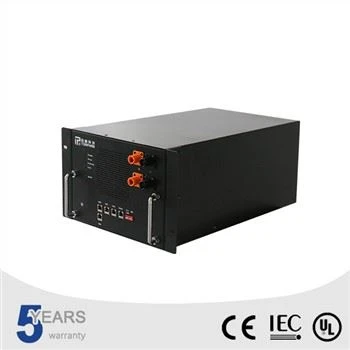
Job 1: measure everything, all the time
A BMS starts as a measuring instrument. The platform measures each cell's voltage across a 1.0 to 5.0V range with a measurement error of plus or minus 0.2%, pack current with an error of plus or minus 0.5%, and temperature at six points across a -20 to 85 C range with plus or minus 1 C accuracy, on a 16-cell pack working at DC 36 to 72V. Those tolerances are not decoration: cell-level millivolt visibility is what lets the system notice one weak cell in a string of sixteen long before that cell becomes a failure.
Job 2: calculate the state of charge
A lithium pack's voltage curve is too flat for a simple voltmeter to read fuel level from, so the BMS calculates state of charge — the feature list's first item — by integrating current over time against the measured voltages and temperatures. It also tracks the pack's health, and it reports both to the outside world: to the optional LCD display that shows the internal condition of the battery cell by cell with historical data, to the charger, and to fleet or plant software through its three CAN buses and RS485 port at 250 Kbps and 9600 baud respectively.
Job 3: protect the pack — the non-negotiable job
The protection list for the Torphan BMS covers cell over-voltage and under-voltage, over-current, over-temperature and under-temperature, applied against the programmed limits in the battery profile. When a limit is breached, the BMS acts: it can disconnect the pack through its relays and contactors (the platform records 2 digital outputs and 8 programmable outputs for control duties), and it triggers error codes when a cell or the pack is in poor health. The forklift literature gives this a human scale: the LFP cell chemistry itself is stable to 270 C, but the BMS shuts the battery down at 65 C if it detects a problem. Protection is also why the smaller packs on this site advertise automatic cut-offs — the 12V solar unit's protection system, for example, shuts the battery down below 8V or above 15.8V.
Job 4: balance the cells
No two cells age identically, so without balancing a pack's usable capacity shrinks to its weakest cell. The platform balances intelligently and actively: a 2 A active balancing current that moves energy from high cells to low cells instead of burning it off, cell by cell, to maximise the usable range of the battery. The BMS article on active balancing on this site explains the mechanism and why it matters more as packs get larger and older.
Job 5: control the charger, and cooperate with the system
The feature list includes battery charger control, and in the wider system the BMS is one of three core components of the energy storage system alongside the cells and the power conversion system: it monitors and controls the battery in real time so the PCS and the grid interface can do their jobs safely. On a forklift, the charger reads the BMS over CANbus and charges to the pack's actual limits; in storage, the inverter does the same. Unplug the BMS and none of that cooperation exists — the pack becomes a box of cells with a fuse.
The short version
A BMS measures, calculates, protects, balances and communicates. It is the reason a LiFePO4 pack can be warranted for thousands of cycles instead of merely expected to survive them, and the reason two packs with identical cells can be entirely different products. When comparing battery quotes, ask for the BMS specification — cell count, measurement accuracy, balance current and communication — with the same seriousness as the capacity figure.
The BMS in numbers: reading a real specification
Return to the PCS BMS table and read it as a buyer. Sixteen cells per BMS tells you the pack architecture it serves (a 51.2V string). Balance current of 2 A, active, tells you it can correct meaningful imbalance during operation, not just trim at rest. Three CAN buses plus RS485 tells you it can speak simultaneously to a charger, an inverter and a monitoring system — the storage design's three-component model (cells, PCS, BMS) depends on exactly that. Temperature measured at six points, not one, tells you gradients inside the pack are visible. And the error bands — plus or minus 0.2% on voltage, 0.5% on current, 1 C on temperature — tell you how much to trust the state-of-charge number on the display. A BMS specified this way is an instrument; a BMS specified as "with BMS protection" is a promise.
What happens without one — the honest baseline
Lead-acid forklift batteries ran for a century with no BMS at all, so the fair question is why lithium cannot. The answer is in the chemistry's failure modes: a lithium cell pushed beyond its voltage or temperature limits degrades quickly and, in less stable chemistries, dangerously; and a series string of lithium cells drifts apart in a way lead-acid's gassing equalisation crudely corrected. The LFP safety case — cells that do not burn or explode even when damaged — is a property of the chemistry and the BMS together: the chemistry tolerates abuse, and the BMS ensures abuse is detected and stopped early. That pairing, not either half alone, is what gets installed on trucks and home walls.
Specifying a BMS when you buy a pack
Most buyers never buy a bare BMS; they buy a pack and inherit its BMS. The platform on this site is sold both ways — as the built-in management of the battery range and as a BMS product in its own right — which makes its datasheet a good checklist for either purchase. Ask: how many cells does it manage, and at what measurement accuracy? Is balancing active or passive, and at what current? Which buses does it speak, and can it control the charger? What are its temperature points and cut-off behaviour? The answers separate a managed battery from an unmanaged one more reliably than any capacity claim, and they cost nothing to request with the quote.